
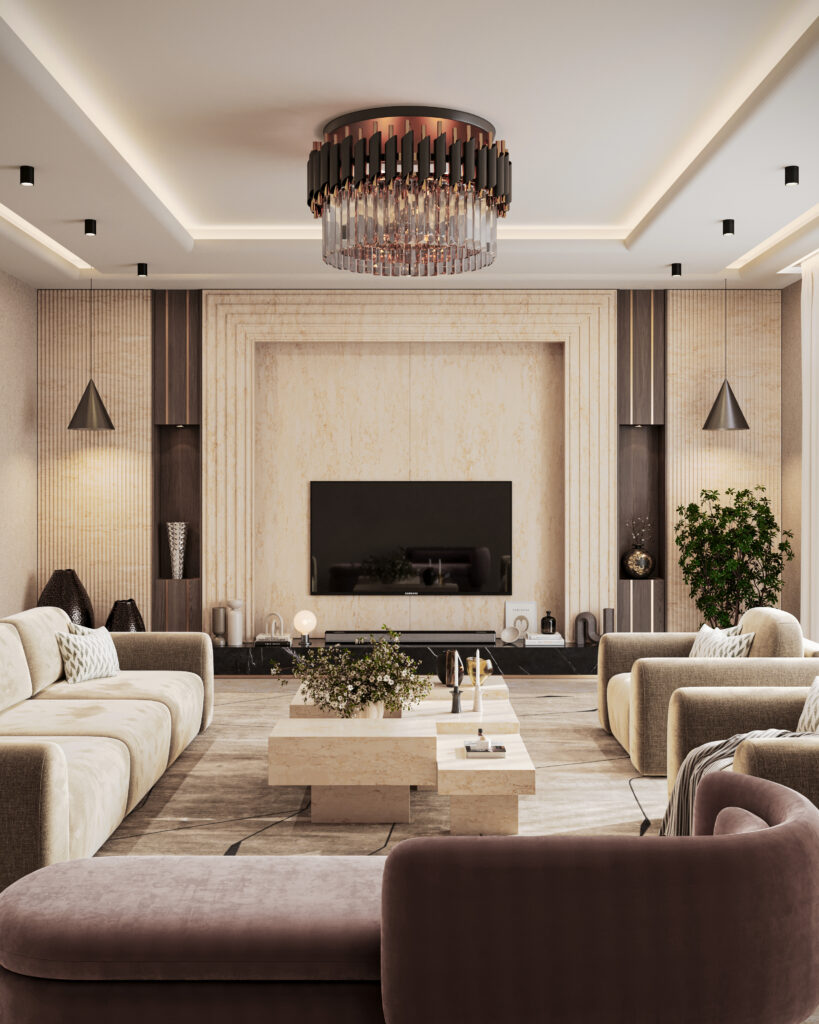
Stone has always been a favourite for kitchens, bathrooms and other high-use areas. But today, there is no reason to stop there. As engineered surfaces become thinner, larger and more versatile, stone can be used across furniture, walls, wardrobes, flooring and even smaller design details.
The idea is simple: instead of treating stone as a material reserved for one particular room, use it as a design element that can connect different parts of the home. Here are some creative ways to do it.
Give Your Coffee Table a Stone Makeover
A coffee table can be much more than a functional piece of furniture. A stone tabletop instantly gives it a more substantial, sophisticated look, particularly when paired with a simple metal or wooden base.
The same idea can work for console tables, side tables and bedside units. A slim stone surface can add texture and character without making the furniture feel too heavy.
With the right stone pattern, even a relatively simple table can become a focal point in the room.
Create an Accent Wall With Fluted Stone
If you want to make a stronger statement, look towards your walls. Stone can be used to create an accent wall behind a television unit, sofa, dining area or even a bed.
Fluting is one way to make this application more interesting. Vertical grooves across an engineered stone surface create light and shadow, adding depth and a subtle architectural quality to the wall. It is a particularly effective way to add texture without introducing another colour or material.
Large-format slabs can make the effect even more seamless by reducing the number of visible joints across the wall.
Take Stone Beyond the Kitchen Countertop
The kitchen remains one of the most natural places to use engineered stone, but its potential goes much further. Specta’s Krest Collection is designed specifically with this flexibility in mind.
Developed using KREOS Technology, Krest introduces a new generation of ultra-compact quartz surfaces with a sleek 12 mm thickness, combining strength, durability and application flexibility. Its 3500 × 2500 mm super-jumbo slab format also allows designers to work across expansive surfaces with fewer joints and visual breaks.
This makes Krest suitable for applications including:
- Furniture and tables
- Wardrobes and cabinetry
- Flooring
- Wall cladding
- Accent surfaces
The larger format is particularly useful when you want to carry the same material across multiple surfaces while maintaining visual continuity.
Make Wardrobes Part of the Design
Wardrobes often take up a considerable amount of wall space, so why treat them as purely functional storage? Stone-inspired surfaces can be introduced on wardrobe shutters or selected panels to give the elevation a more architectural appearance. This works especially well in bedrooms where the wardrobe occupies an entire wall.
Krest’s slim 12 mm profile makes it possible to explore such applications without relying only on traditional, heavier stone formats. A stone surface can become part of the room’s overall design rather than simply another storage finish.
Add Stone to Smaller Details
You don’t always need to cover an entire wall or floor to make an impact. Smaller applications can be just as effective.
Think about floating shelves, window ledges, niches, fireplace surrounds, study desks or compact bar counters. Using the same stone-inspired surface in a few carefully chosen places can create subtle repetition throughout the home.
Think Beyond One Room
Perhaps the most interesting thing about stone today is how easily it can travel from one space to another. A surface used on the kitchen island can reappear on a dining table. The same material can continue onto a feature wall or become part of a wardrobe elevation.
The Krest Collection by Specta makes this kind of continuity easier to explore, thanks to its combination of large slab dimensions, slim 12 mm construction and application flexibility.
Let Stone Become Part of Your Home’s Design Language
Stone no longer has to be limited to countertops and bathroom vanities. With newer engineered surfaces, you can use it to create furniture, dress up walls, define spaces and add architectural detail in unexpected places.
The key is not to use stone everywhere, but to find a few applications where its colour, pattern and texture can make a meaningful difference. Done thoughtfully, it can become a subtle thread that connects the different corners of your home.

