
When your mind starts racing or your body feels restless, the simplest way to steady yourself is to come back to your senses. The technique used to achieve this is called sensory grounding: using your five senses to anchor your attention firmly in the present moment.
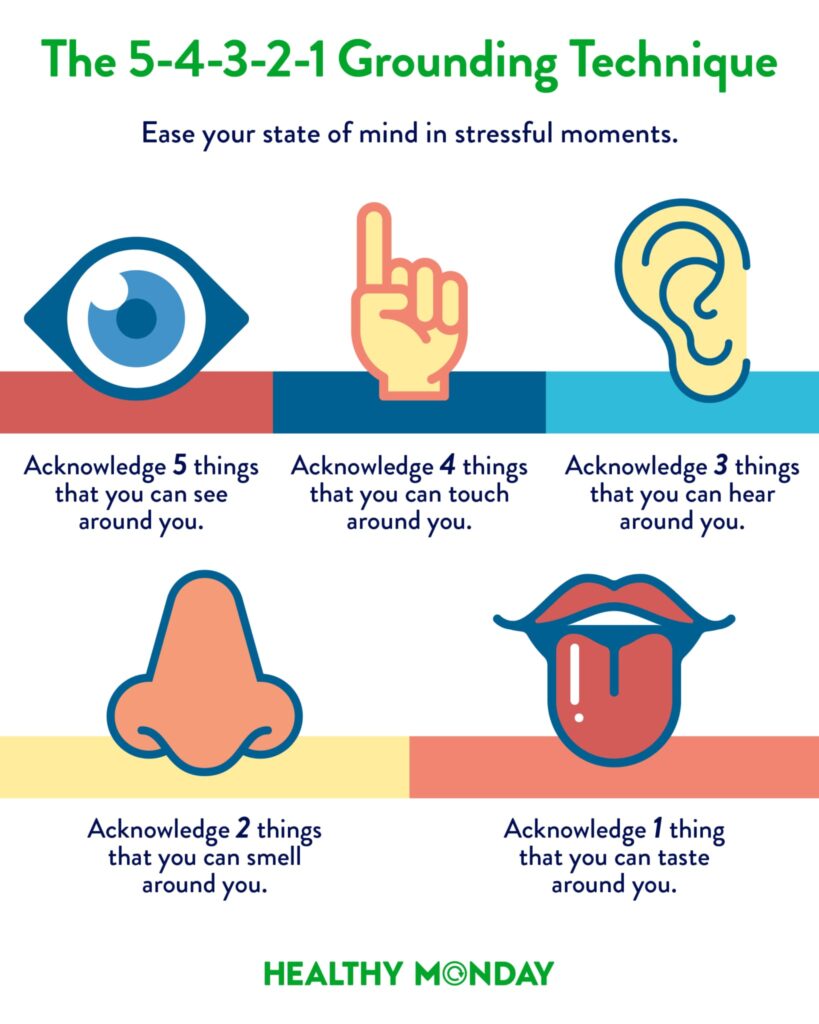
Mental health professionals often teach the 5-4-3-2-1 technique as a quick way to steady the mind. It works by engaging the senses in descending order, gently pulling your attention out of racing thoughts and into immediate reality.
The kitchen mirrors this method effortlessly. Almost every cooking task activates all five senses, grounding you before you even realize you’re practicing mindfulness.
Sensory grounding is often taught as a tool for moments of crisis, yet it’s strength also lies in daily use – as a gentle, preventive habit for steadying the mind in the day-to-day. The kitchen, built around routine and repetitive tasks, offers an accessible environment for building this calming routine.
Why The Kitchen is Perfect for Grounding
The kitchen works as a grounding space because it is intensely sensory, offering immediate anchors for all five senses. For this purpose, we focus on routine, low-effort tasks that are within or slightly beyond your comfort zone, making them easy to turn into a habit. The power here lies in their simplicity: engaging your body in a familiar, low-demand rhythm automatically redirects your focus from racing thoughts and daily chaos to physical action and sensation, regulating your nervous system.
To practice it effectively, one needs to pay a little attention to what’s being done. Take for instance, a relatively simple task like making rice or assembling a sandwich. Here is how each sense can anchor you:

Touch: Tactile engagement grounds the mind in physical reality, pulling focus away from abstract worries. Anchors include the coolness of the water as you wash the grains, the rough texture of the rice, the softness of the bread, and the stable feel of the counter beneath your hands.

Sound: The mind finds stability in rhythm and predictable sounds, registering the environment as safe. Listen for the dry grains hitting the pot, the steady flow of water being poured in, the rhythm of any chopping or slicing, and the clink of metal on glass.

Smell: Smells are directly linked to the emotional centers of the brain, making them an instant link to the present moment. Notice the subtle, earthy aroma of the dry rice grains when you open the box or packet, the sharp, distinctive scent of condiments, or the yeasty smell of the bread itself.

Sight: Focusing on visual details slows down the mental speed, giving the racing mind a specific object to observe. Look at the water going from clear to milky as you rinse the rice, the colour layering on the sandwich (vegetables, protein, spices, condiments), and the clear blue of the burner fire.

Taste: Taste is a powerful, instantaneous cue that fully engages the present self. Try focusing on the simple, distinct flavor of the sharpness of cheese, the complementary sweetness of fresh ricw, the heat of pepper, or the tang of a freshly sliced tomato before incorporating it.
The Science of Rhythm and Tactile Calm
The research on culinary and tactile therapies confirms that when you engage in repetitive, sensory-rich activities, your body releases chemicals that induce calm:
- GABA: The body’s primary calming neurotransmitter. Repetitive, slow motion helps stimulate its release, reducing feelings of anxiety.
- Serotonin: This mood stabilizer increases with feelings of satisfaction and completion, which cooking naturally provides, especially when followed by a steady meal.
- Oxytocin: The “connection hormone” is released when you are preparing or sharing food, strengthening feelings of safety and community.
Your body already knows how to respond to rhythm and touch – it calms itself through motion and repetition.
How to Make It a Daily Practice
The goal isn’t to start a crisis-management plan, but to build micro-resets into your existing routine. You don’t need to change what you do cook – only change how you experience it.

Simple Grounding Tasks
Morning Rituals (Coffee, Tea, or Water): Morning routines are naturally sensory anchors: the specific weight and warmth of your mug, the distinctive sound of the kettle or the machine, the fresh scent of your brew, or the sound of water being filled into your bottle, all provide immediate cues.
Simple Prep (Fruit and Vegetables): Preparing a single piece of produce for a snack offers powerful shifts in sensation. Notice the weight of what you’re handling, how its texture changes after you wash it, the flow of the water. Feel the grip of the knife and the resistance when slicing, and the sudden burst of aroma released when the skin is broken.
Rhythmic Engagement (Chopping and Light Whisking): Repetitive motion creates predictable rhythm. Pay attention when you’re trying to slice things evenly, lightly whisking eggs or yogurt, or mixing a small dressing; the steady sound and the changing texture beneath your hands naturally steady the mind and draw attention back to the moment.
The Clean-Up Reset: A quick clean-up provides a perfect tactile anchor. When wiping down a counter or rinsing a plate, the temperature of the water, the feel of the damp cloth against the smooth surface, and the pressure of your hand as you wipe all offer simple, effective focus points.
Each simple task signals safety to your nervous system and helps it settle. Each small shift helps release tension naturally, turning ordinary chores into grounding moments that build habits to support your mental health.
Takeaway
Mindful execution of kitchen tasks provides the same calming, stress-busting benefits that formal sensory grounding exercises do – only it fits naturally into daily life. The kitchen is already set up for it: a space that thrives with rhythm and repetition and engages the senses.
Each time you prep, clean, or prepare something small, your body gets a chance to slow down and reset. The sounds, textures, and smells you encounter are simple cues that pull you out of your head and back into the present. Over time, these small moments strengthen focus, ease tension, and build mental steadiness – while having a practical outcome.

That’s the heart of Surfaced For Life: using ordinary routines in the kitchen to take care of yourself. You can start today – the next time you’re in the kitchen, let it be more than a task. Let it be a few minutes of calm that you build into your day.
We see the kitchen as a space for calm, connection, fun, and growth. Follow us on Instagram @surfacesforlife for more.